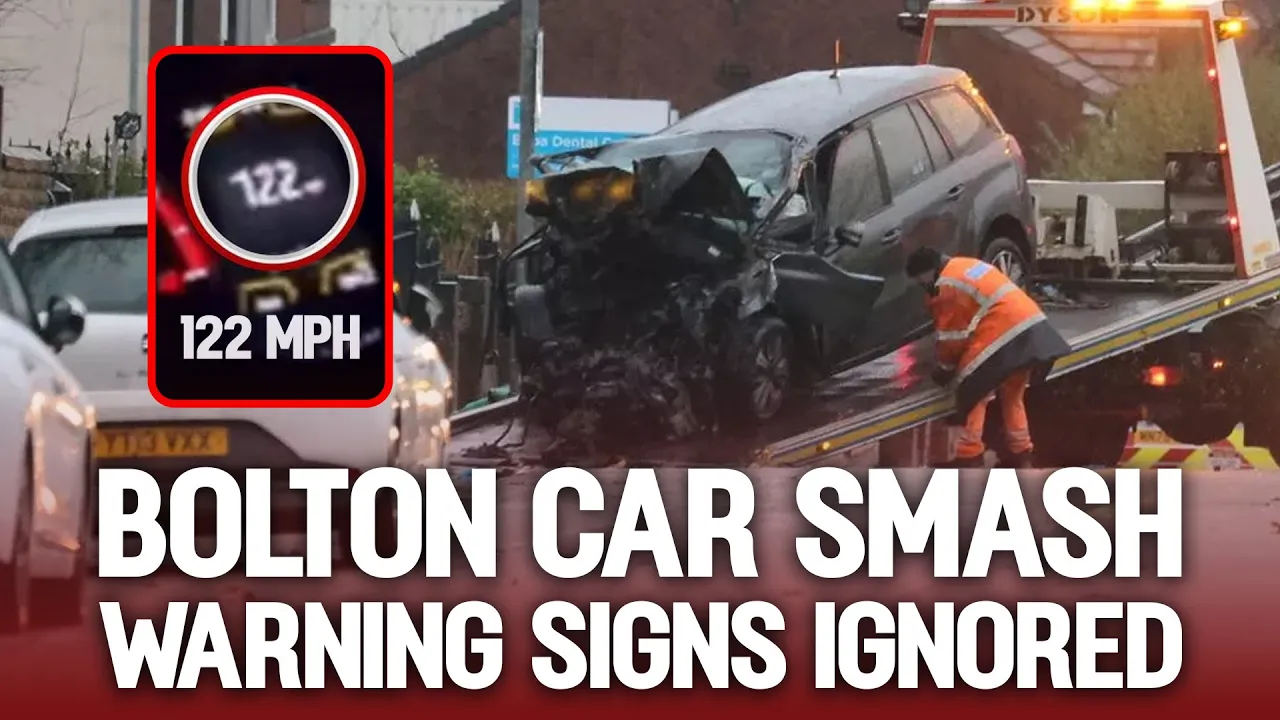
Bolton Car Smash: Pain, Accountability & Hard Questions
Sharing your earnings and stats online can feel risky, but it’s been a game-changer for my growth and trust with readers. Here’s what I’ve learned from being transparent.
Watch The Video:
Muslim Youth: A Pattern We Keep Ignoring
If we’re honest, this tragedy wasn’t unpredictable. ‘It waspreventable’
Every time something like this happens, we repeat the same words: “It’s tragic.” “They were young.”
But here is the question we keep avoiding: How many times does this have to happen before we admit we are failing our own youth?
Because if we don’t ask the uncomfortable questions, we will never reach the root of this problem. And without honesty, nothing changes.
Let’s be clear about the facts.
A car travelling at 122 miles per hour.
Modified to deliver double its original power.
A vehicle that had already flipped weeks earlier.
Warnings ignored. Obsession with speed normalised.
The result? Three teenagers dead — killed by someone they went to school with. A father killed. Others left with life-changing injuries.
So we need to ask ourselves: How many more funerals? How many warnings do we need?
We see it on our streets every day — residential roads turned into race tracks. Overtaking at insane speeds.
Sometimes it’s thrill-seeking, joy riding
Sometimes drugs, balloons, alcohol.
And sometimes it escalates — to knives, violence, and prison cells.
Ask youth workers. Ask probation officers. They will tell you the same uncomfortable truth:
Our young people are over-represented in youth offending institutions and prisons.
That should shake every parent. Every elder. Every mosque committee. But clearly, the message isn’t getting through.
So the real question is not why this happened — it’s why it keeps happening.
Who Holds Responsibility?
This didn’t come out of nowhere.
Car was heavily modified — far more powerful than standard.
Extreme speed. Performance culture. loud engines - Not hidden. Not secret.
It was visible. Shared online. Celebrated. Normalised.
Clear warnings. A serious crash weeks earlier. A car flipped. A known appetite for speed.
At that point, we have to ask: What more warning was required?
Where was the intervention? Where was the adult willing to say: “This must stop now.”. Not advisory but firm action?
Parents — this is an uncomfortable question, but it must be asked.
Teenagers out near 1am. High-powered vehicles. No supervision. No boundaries. That should trouble us.
And what about our institutions? When will our masjids show the moral courage to speak about real issues?
It’s about prevention. Guidance — early, clear, and unapologetic — even if it’s unpopular. But our mosques are still stuck in the past or heads in the sand pit!
Yes, Western media glamorises speed and risk. That influence is real.
But we cannot outsource responsibility. We cannot blame everything on “the West.”
Because when the warning signs are in front of us — our silence is our complicity.
And when tragedy strikes - we rush to sympathy. Really? Sympathy without accountability is not prevention.
Sympathy Without Accountability
After the tragedy, there was an outpouring of grief. That response is human. And it’s understandable. Nobody should deny that pain.
But we need to be honest — sympathy is not enough.
We’ve heard admissions reckless speed was a concern.Acknowledgements that people close were worried.
And it will be for ever a heavy burden to carry that weight.
But sincerity afterwards does not erase our silence, ourinaction before the tragedy, when we ignored warnings.
And what will change before the next tragedy?
If someone drove drunk and killed others, we wouldn’t say “they were young”
We would say clearly: the behaviour was dangerous — and it had to be stopped earlier.
Reckless speed is no different. Ignoring warning signs is no different.
Action, Not Just Words - Prevention Requires Courage
We cannot keep waiting until it’s too late. This was a chain of ignored warnings.
We cannot keep outsourcing responsibility to “society”, to others, while refusing to clean our own house.
If parents won’t intervene, who will?
If mosques won’t address difficult, real-world issues, what role are they playing?
Prevention requires courage — and courage means action, not empty statements or checklist exercises.
For parents:
Stop funding dangerous behaviour.
Take accountability of your children. Youth wondering outside at midnight is not taking responsibility
Souped up cars is not taking responsibility
Stop talking, empty statements and take firm responsibility and actions to bring your youth into control
For mosques and youth leaders:
Move on from your abstract sermons. And for God sake start to address real issues
Your local youth are into drugs, crime, prisons, dangerous driving – and you keep discussing Mawlids, Yarmis and othertopics?
Tell me how many of your youth are in youth offendersinstitutions? Is the rate increasing or decreasing for your community?
Tell me substance abuse figures for your local community?
Just like you publish and announce every £5 donation – so you should know and take responsibility for every crime being committed by your youth – your community as their tarbiyyah is your responsibility
For the wider community:
Call out recklessness early. Privately first — firmly and respectfully. Publicly, if needed — because silence protects no one.
This is about prevention. Silence is not compassion — it’snegligence.
And yes, society and government also have a role.
The glorification of speed, modified cars, and reckless behaviour has consequences — and regulation must keep pace with reality.
We need more education for young people about driving safely
But let’s be clear: external influence does not absolve internal responsibility.
Bolton wasn’t inevitable. It was ignored warnings, soft accountability, and a community afraid to speak.
If we don’t change, we already know what the next headline will be.
The question is — will we act before it’s written?
Watch The Video:
Muslim Youth: A Pattern We Keep Ignoring
If we’re honest, this tragedy wasn’t unpredictable. ‘It waspreventable’
Every time something like this happens, we repeat the same words: “It’s tragic.” “They were young.”
But here is the question we keep avoiding: How many times does this have to happen before we admit we are failing our own youth?
Because if we don’t ask the uncomfortable questions, we will never reach the root of this problem. And without honesty, nothing changes.
Let’s be clear about the facts.
A car travelling at 122 miles per hour.
Modified to deliver double its original power.
A vehicle that had already flipped weeks earlier.
Warnings ignored. Obsession with speed normalised.
The result? Three teenagers dead — killed by someone they went to school with. A father killed. Others left with life-changing injuries.
So we need to ask ourselves: How many more funerals? How many warnings do we need?
We see it on our streets every day — residential roads turned into race tracks. Overtaking at insane speeds.
Sometimes it’s thrill-seeking, joy riding
Sometimes drugs, balloons, alcohol.
And sometimes it escalates — to knives, violence, and prison cells.
Ask youth workers. Ask probation officers. They will tell you the same uncomfortable truth:
Our young people are over-represented in youth offending institutions and prisons.
That should shake every parent. Every elder. Every mosque committee. But clearly, the message isn’t getting through.
So the real question is not why this happened — it’s why it keeps happening.
Who Holds Responsibility?
This didn’t come out of nowhere.
Car was heavily modified — far more powerful than standard.
Extreme speed. Performance culture. loud engines - Not hidden. Not secret.
It was visible. Shared online. Celebrated. Normalised.
Clear warnings. A serious crash weeks earlier. A car flipped. A known appetite for speed.
At that point, we have to ask: What more warning was required?
Where was the intervention? Where was the adult willing to say: “This must stop now.”. Not advisory but firm action?
Parents — this is an uncomfortable question, but it must be asked.
Teenagers out near 1am. High-powered vehicles. No supervision. No boundaries. That should trouble us.
And what about our institutions? When will our masjids show the moral courage to speak about real issues?
It’s about prevention. Guidance — early, clear, and unapologetic — even if it’s unpopular. But our mosques are still stuck in the past or heads in the sand pit!
Yes, Western media glamorises speed and risk. That influence is real.
But we cannot outsource responsibility. We cannot blame everything on “the West.”
Because when the warning signs are in front of us — our silence is our complicity.
And when tragedy strikes - we rush to sympathy. Really? Sympathy without accountability is not prevention.
Sympathy Without Accountability
After the tragedy, there was an outpouring of grief. That response is human. And it’s understandable. Nobody should deny that pain.
But we need to be honest — sympathy is not enough.
We’ve heard admissions reckless speed was a concern.Acknowledgements that people close were worried.
And it will be for ever a heavy burden to carry that weight.
But sincerity afterwards does not erase our silence, ourinaction before the tragedy, when we ignored warnings.
And what will change before the next tragedy?
If someone drove drunk and killed others, we wouldn’t say “they were young”
We would say clearly: the behaviour was dangerous — and it had to be stopped earlier.
Reckless speed is no different. Ignoring warning signs is no different.
Action, Not Just Words - Prevention Requires Courage
We cannot keep waiting until it’s too late. This was a chain of ignored warnings.
We cannot keep outsourcing responsibility to “society”, to others, while refusing to clean our own house.
If parents won’t intervene, who will?
If mosques won’t address difficult, real-world issues, what role are they playing?
Prevention requires courage — and courage means action, not empty statements or checklist exercises.
For parents:
Stop funding dangerous behaviour.
Take accountability of your children. Youth wondering outside at midnight is not taking responsibility
Souped up cars is not taking responsibility
Stop talking, empty statements and take firm responsibility and actions to bring your youth into control
For mosques and youth leaders:
Move on from your abstract sermons. And for God sake start to address real issues
Your local youth are into drugs, crime, prisons, dangerous driving – and you keep discussing Mawlids, Yarmis and othertopics?
Tell me how many of your youth are in youth offendersinstitutions? Is the rate increasing or decreasing for your community?
Tell me substance abuse figures for your local community?
Just like you publish and announce every £5 donation – so you should know and take responsibility for every crime being committed by your youth – your community as their tarbiyyah is your responsibility
For the wider community:
Call out recklessness early. Privately first — firmly and respectfully. Publicly, if needed — because silence protects no one.
This is about prevention. Silence is not compassion — it’snegligence.
And yes, society and government also have a role.
The glorification of speed, modified cars, and reckless behaviour has consequences — and regulation must keep pace with reality.
We need more education for young people about driving safely
But let’s be clear: external influence does not absolve internal responsibility.
Bolton wasn’t inevitable. It was ignored warnings, soft accountability, and a community afraid to speak.
If we don’t change, we already know what the next headline will be.
The question is — will we act before it’s written?
My mission is to
Spread da’wah that stays authentic
No spam, unsubscribe anytime.